
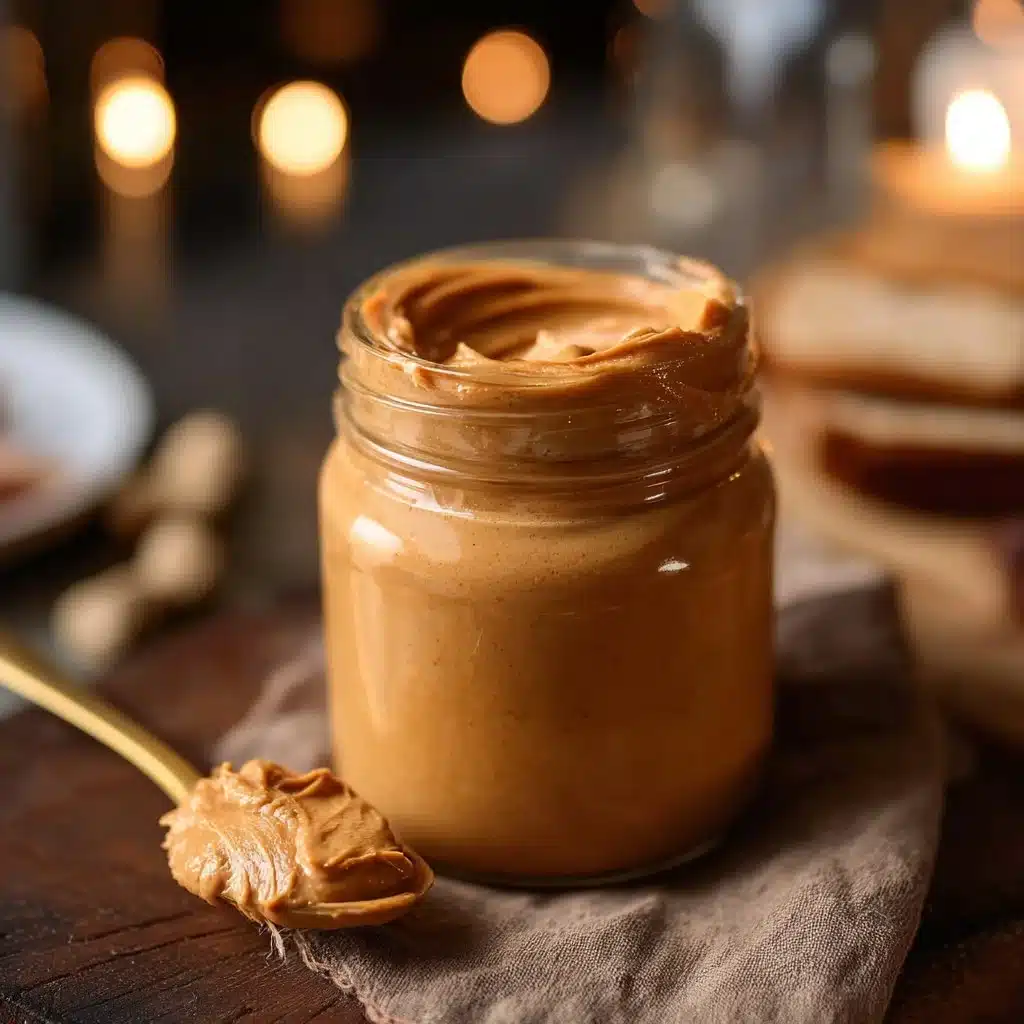
Simple Peanut Butter arrives as a study in restraint: pure roasted peanuts, a pinch of salt, and a silk-smooth finish. This homemade rendition emphasizes a clean, nutty aroma and a glossy texture that store brands rarely match. For a contrasting peanut confection, see chocolate peanut butter protein bars, which pair nutty richness with deep cocoa notes.
Why Make This Recipe
- Effortless Yet Elegant — few minutes in a food processor transforms whole nuts into a refined spread.
- Minimal Ingredients — pantry staples only, letting peanut flavor take center stage.
- Impressive Flavor — toasty, slightly caramelized notes from roasted peanuts create a layered taste.
This version elevates ordinary peanut butter by focusing on technique: pulse, rest, and patience to coax natural oils and develop a velvety mouthfeel. A brief roast (if using raw peanuts) and a final scrape with a spatula yield a glossy consistency and pronounced aroma reminiscent of artisanal nut butters.
Ingredients:
Base
- 3 cups dry-roasted unsalted peanuts — lightly warm or room temperature (if raw, roast at 350°F/175°C for 10–12 minutes, cool).
- Sauce / Binder
- 1–2 teaspoons neutral oil (peanut, grapeseed, or light olive oil) — add only if needed for creaminess.
- 1/4 teaspoon fine sea salt — adjust to taste.
- Optional Brightener
- 1/2 teaspoon honey or maple syrup — for a gentle sweetness (optional).
- Topping (optional)
- Flaky sea salt or a drizzle of toasted sesame oil for finishing.
Precision notes: measure peanuts by volume, use a sturdy food processor, and scrape the bowl often for even texture.
How to Make Simple Peanut Butter:
- Prepare nuts: If using raw peanuts, spread them on a baking sheet and roast at 350°F/175°C until fragrant and lightly browned, 10–12 minutes. Cool until warm to the touch. (A light roast intensifies caramel notes.)
- Mini-tip: Roasting in a single layer ensures even color; watch for quick browning at the end.
- Pulse to break down: Place cooled roasted peanuts in a food processor. Pulse 10–15 times until coarsely chopped — the mixture should look sandy and begin to clump.
- Sensory cue: you’ll smell a deeper, toasted aroma and see a crumbly texture.
- Process to creamy: Run the processor continuously for 1–2 minutes. Stop and scrape sides. Continue in 30–45 second bursts until the blend transforms from gritty to paste-like, then to glossy and smooth. Expect 3–6 minutes total depending on your machine.
- Mini-tip: Let the motor rest if it gets hot; short rests protect texture and motor life.
- Adjust seasoning and fat: Add 1/4 teaspoon salt, test, and add up to 1–2 teaspoons oil only if the butter is too stiff. For a touch of sweetness, pulse in honey or maple syrup.
- Sensory cue: finished butter should be shiny, spreadable, and carry a warm, nutty fragrance.
- Final finish: Scrape the peanut butter into a jar, smooth the surface, and press a thin layer of oil or a sprinkle of flaky salt on top if desired. Seal while slightly warm to minimize air pockets.
- Mini-tip: Store a small taste in the fridge overnight — flavors meld and the texture slightly firms to a luxurious spread.
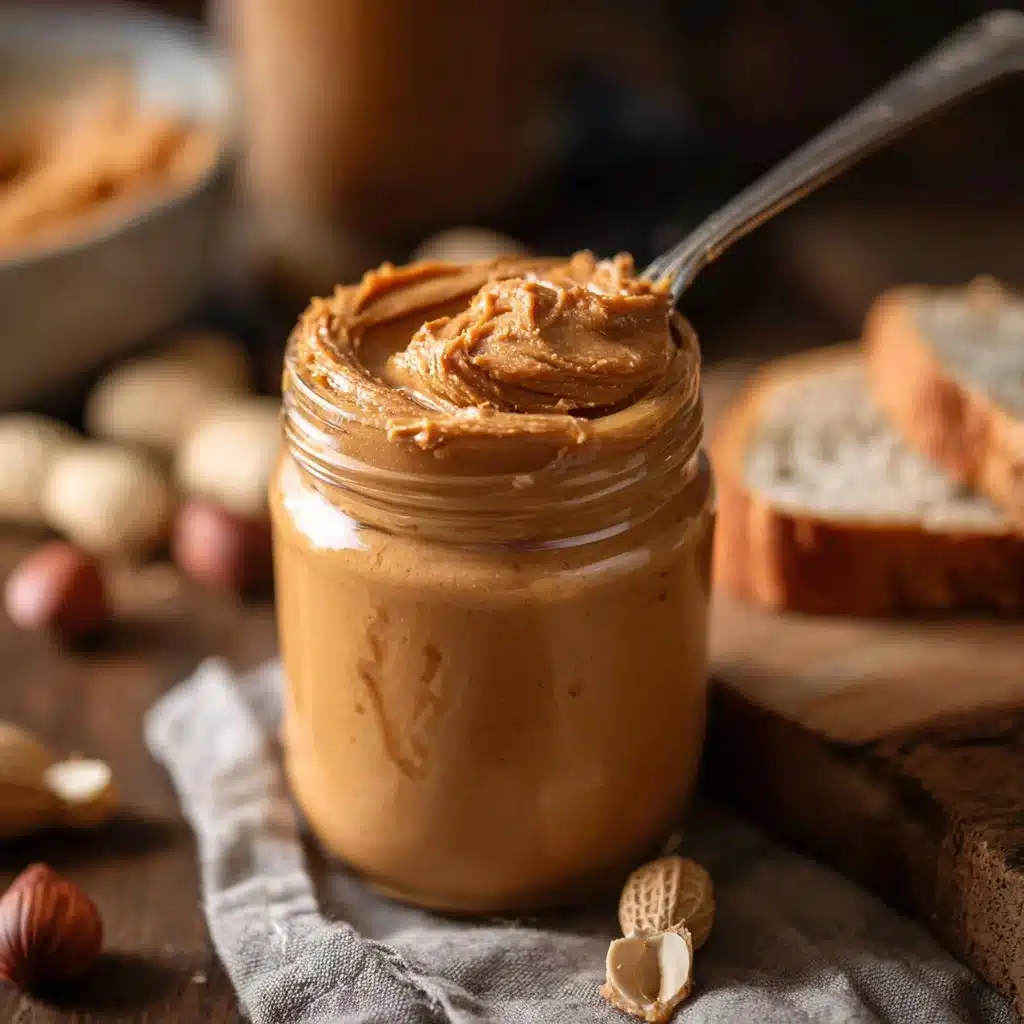
How to Serve Simple Peanut Butter:
Serve with intention: smear a generous ribbon across toasted sourdough, crown with thinly sliced green apple and a pinch of flaky salt, or create a trio of spreads alongside cultured yogurt and honey for a refined breakfast board. For elegant snacking, pipe quenelles onto endive leaves and top with toasted sesame seeds. For contrast, pair warm toasts with chilled fruit and a dusting of citrus zest.
Also consider a playful pairing with Halloween peanut butter cups when presenting a dessert tasting—salted simplicity offsets sweet chocolate.
How to Store Simple Peanut Butter:
Keep in an airtight jar in the refrigerator for up to 4 weeks for best flavor. To preserve texture, press a thin layer of neutral oil on the surface before sealing if you expect to store longer. If oil separates, stir thoroughly with a spatula; bring to room temperature 20–30 minutes before spreading to restore silkiness. For daily use, store in a cool pantry for up to 2 weeks if you prefer a softer consistency.
Tips to Make Simple Peanut Butter:
- Use warm peanuts: processing slightly warm nuts releases oils faster and yields a silkier finish.
- Pulse, then rest: intermittent processing prevents overheating and helps achieve uniform creaminess.
- Control sweetness and salt: add these at the end in small increments — they concentrate as the butter settles.
- Choose the right equipment: a high-torque processor or blender shortens time and reduces graininess.
Variation (if any):
- Brown-butter peanut butter: brown 1 tablespoon butter and blend in for a nutty, toasty depth.
- Honey-sesame twist: stir in 1 teaspoon toasted sesame oil and 1 teaspoon honey for a savory-sweet balance.
- Nut blend: swap half the peanuts for roasted cashews or almonds for a layered, mellow profile.
- Presentation upgrade: pipe into a shallow dish and top with crushed roasted peanuts and edible flowers for a refined spread board.
FAQs:
Can I make this with raw peanuts?
Yes. Roast raw peanuts at 350°F/175°C for 10–12 minutes until golden and fragrant, then cool slightly before processing to develop flavor and oils.
Why is my peanut butter grainy?
Graininess usually means the nuts weren’t processed long enough or the motor overheated. Process in bursts, scrape the bowl, and allow short rests; a few extra seconds will smooth the texture.
How long will homemade peanut butter last?
Refrigerated, it stays best for about 3–4 weeks. Proper sealing and a light oil layer on top can extend quality; always use a clean spoon to avoid contamination.
Can I sweeten or salt to taste?
Absolutely. Add sweeteners or salt sparingly and taste after each addition—flavors intensify after resting.
Conclusion
Simple Peanut Butter showcases how meticulous technique and minimal ingredients produce something quietly luxurious: a glossy, aromatic spread with a clean peanut flavor and superior mouthfeel. This recipe rewards small attentions — gentle roasting, measured pulsing, and patient scraping — resulting in a jar that elevates toast, lends depth to sauces, and pairs beautifully with fruit or chocolate. For a different approach and additional technique notes, consult this thoughtful Homemade Peanut Butter Recipe – Love and Lemons. Share your results and variations in the comments or on social media — how would you make this dish your own?
Print
Simple Peanut Butter
- Total Time: 17 minutes
- Yield: 16 servings 1x
- Diet: Vegan
Description
A silky, homemade peanut butter made with pure roasted peanuts and a pinch of salt, emphasizing the nutty flavor and glossy texture.
Ingredients
- 3 cups dry-roasted unsalted peanuts
- 1–2 teaspoons neutral oil (peanut, grapeseed, or light olive oil)
- 1/4 teaspoon fine sea salt
- 1/2 teaspoon honey or maple syrup (optional)
- Flaky sea salt or toasted sesame oil for finishing (optional)
Instructions
- If using raw peanuts, preheat the oven to 350°F (175°C) and roast peanuts for 10–12 minutes until fragrant and lightly browned. Cool until warm.
- Place the cooled roasted peanuts in a food processor and pulse 10–15 times until coarsely chopped.
- Run the processor continuously for 1–2 minutes, scraping the sides, until the mixture becomes smooth and glossy, a total of 3–6 minutes.
- Add salt and optional sweetener, adjusting to taste, then process again to combine.
- Transfer the peanut butter to a jar, smoothing the top, and top with a thin layer of oil or sprinkle of flaky salt, if desired. Seal while slightly warm.
Notes
Store in an airtight jar in the refrigerator for up to 4 weeks or in a cool pantry for up to 2 weeks for a softer texture. Stir if oil separates.
- Prep Time: 5 minutes
- Cook Time: 12 minutes
- Category: Spread
- Method: Blending
- Cuisine: American
Nutrition
- Serving Size: 1 tablespoon
- Calories: 100
- Sugar: 1g
- Sodium: 5mg
- Fat: 8g
- Saturated Fat: 1g
- Unsaturated Fat: 7g
- Trans Fat: 0g
- Carbohydrates: 3g
- Fiber: 1g
- Protein: 4g
- Cholesterol: 0mg