
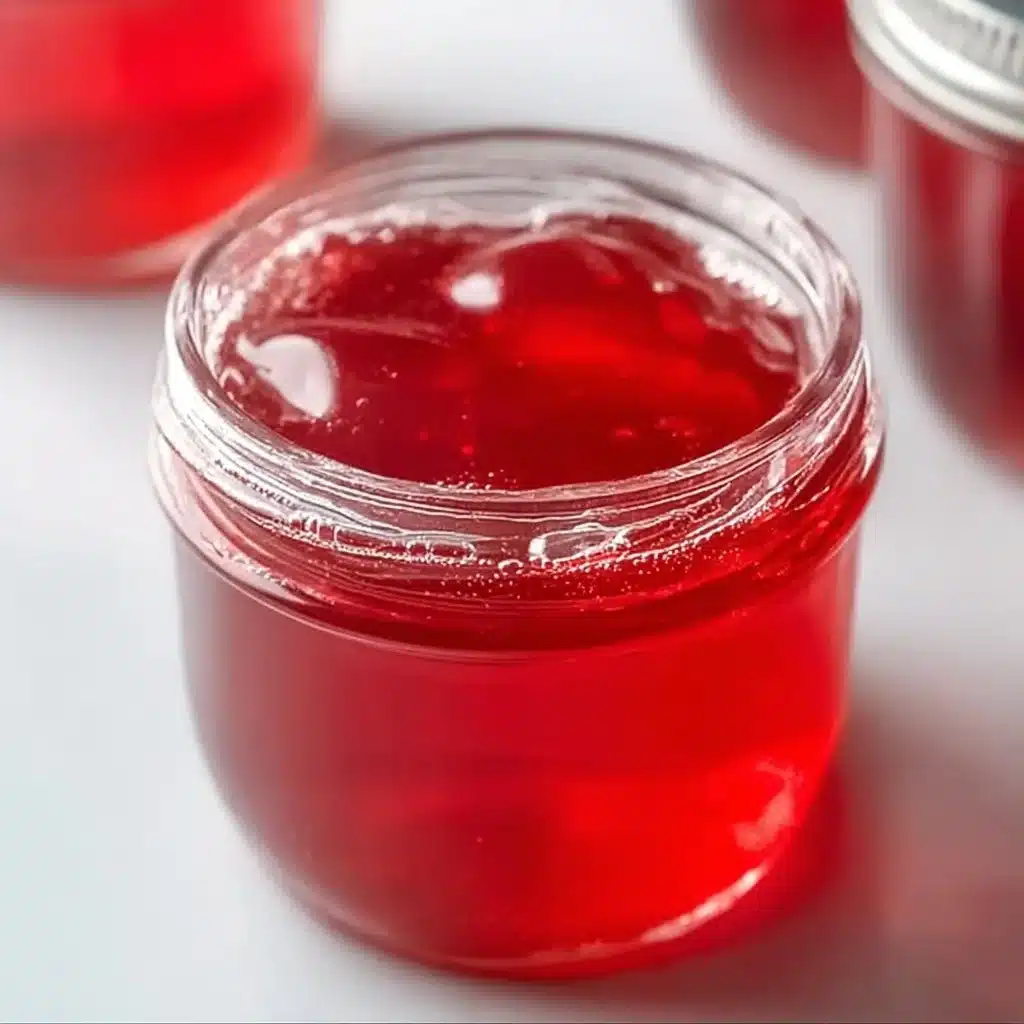
Rhubarb Vanilla Bean Jelly awakens the pantry with a poised balance of tart rhubarb and warm vanilla. This refined jelly concentrates bright, floral fruit notes into a glossy preserve that spreads silkily over toast or pairs with soft cheeses. For a complementary vanilla idea, explore a related take on pure vanilla beverages in this homemade Starbucks vanilla-bean Frappuccino.
Why Make This Recipe
- Effortless Yet Elegant: Simple stovetop technique yields a jewel-bright jelly that looks couture on the table.
- Minimal Ingredients: Pantry staples—rhubarb, sugar, lemon, and vanilla—do the heavy lifting.
- Impressive Flavor: The vanilla bean rounds the rhubarb’s tartness into a fragrant, layered finish.
What elevates this version is the split vanilla bean steeped into the cooking liquid and a careful finish to retain a clean, translucent set rather than an overcooked jammy texture.
Ingredients
Base
- 1 lb (450 g) rhubarb, trimmed and chopped into 1/2-inch pieces — choose firm stalks, discard woody ends. (Note: measure after trimming.)
- 1/2 cup (120 ml) water — room temperature
Sauce / Preserving
- 3 cups (600 g) granulated sugar — weigh for accuracy.
- 1/4 cup (60 ml) fresh lemon juice — strained for clarity.
- 1 (1.75 oz / 49 g) packet powdered pectin (or 4 teaspoons) — see note below for alternatives.
- 1 vanilla bean, split lengthwise and seeds scraped (reserve pod) — or 1 teaspoon pure vanilla extract if needed.
Topping / Finishing
- 1 tablespoon unsalted butter — optional, to reduce foaming (softened).
- Optional: thin lemon zest for garnish.
Precision notes: use a digital scale if possible; vanilla bean quality influences aroma; chilled jars and lids should be sterilized.
How to Make Rhubarb Vanilla Bean Jelly
- Prepare jars and lids by washing, then warming them in simmering water or a low oven to prevent cracking when hot jelly is added.
- Combine chopped rhubarb, water, and the split vanilla bean (seeds and pod) in a medium saucepan. Bring to a simmer over medium heat, stirring occasionally until the rhubarb breaks down and the liquid turns a deep pink, about 12–15 minutes. (Sensory cue: the aroma will become perfumed and the mixture will steam with a rosy hue.)
- Mini-tip: Use a wooden spoon to press the fruit gently; avoid mashing to keep the liquid clear.
- Remove the vanilla pod. Strain the cooked rhubarb through a fine mesh sieve, pressing to extract the juice; discard solids. You should have roughly 2 cups of juice. (Texture cue: the liquid should be glossy and free of pulp.)
- Return the juice to a clean pot. Whisk in the powdered pectin until fully dissolved. Bring to a vigorous boil over high heat.
- Mini-tip: Stir continuously at this stage to prevent scorching; a stainless-steel pan gives the most even heat.
- Add the sugar all at once and stir to dissolve. Bring the mixture to a full boil that cannot be stirred down, and boil hard for 1 minute while continuing to stir. Remove from heat and stir in lemon juice and the softened butter to reduce foam. (Consistency cue: the mixture will thicken and become brilliantly translucent.)
- Skim any foam from the surface with a spoon. Ladle the hot jelly into prepared jars, leaving 1/4 inch headspace; seal immediately and invert for 5 minutes to create a light vacuum, then right-side up to cool. Let jars rest undisturbed until fully set, usually 12–24 hours.
- Mini-tip: If you enjoy other rhubarb preparations, try pairing this jelly with a simple tart or 3-ingredient rhubarb squares for a harmonious dessert selection.
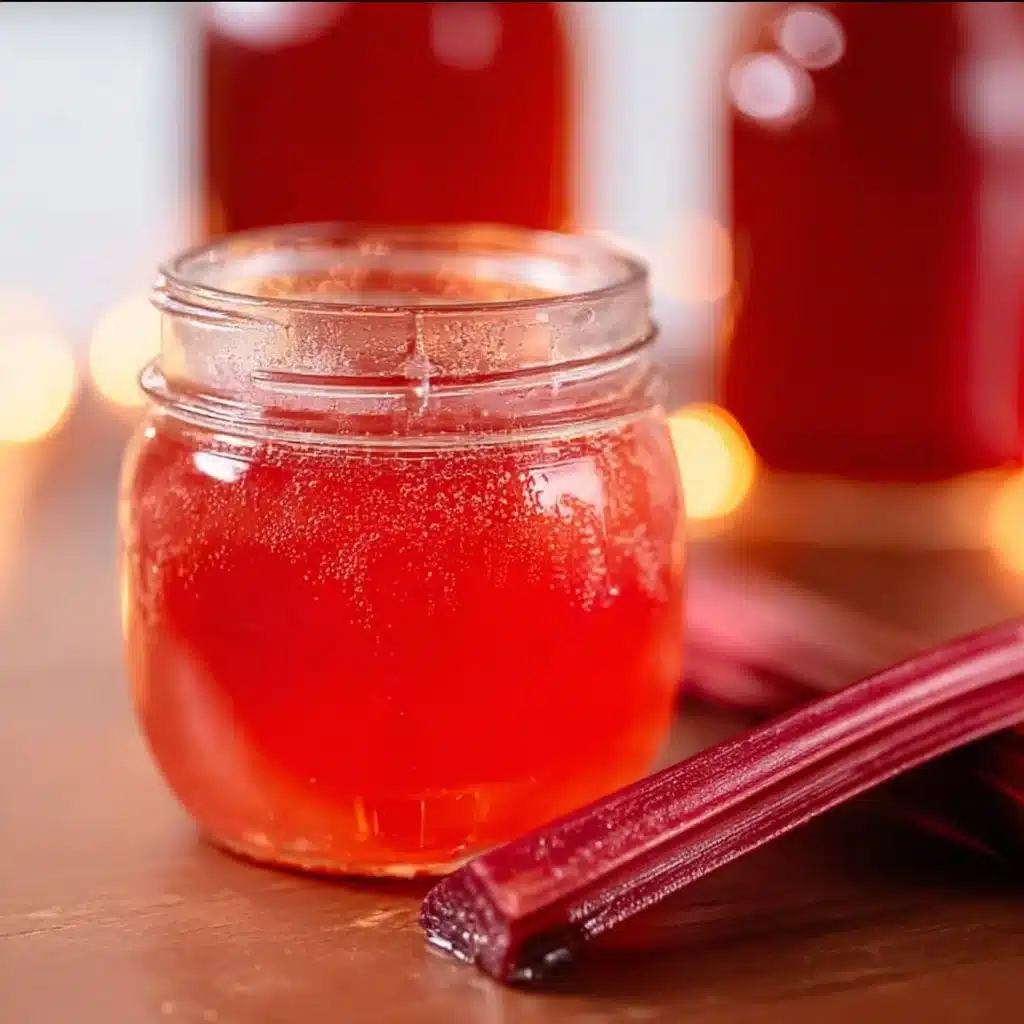
How to Serve Rhubarb Vanilla Bean Jelly
Spoon a glossy quenelle of jelly alongside a slice of aged chèvre or ricotta on a crisp crostino. For breakfast, spread a thin layer on warm brioche and finish with micro basil or edible flowers. Use as a glaze for roasted pork or to fill delicate tartlets—its bright color and silky texture elevate both savory and sweet plates.
How to Store Rhubarb Vanilla Bean Jelly
Cool jars completely before refrigerating. Unopened and properly sealed, store in a cool, dark pantry for up to 12 months. Once opened, keep refrigerated and use within 4 weeks for best flavor. To refresh slightly thickened jelly, warm gently in a double boiler and stir until fluid again, then cool before re-jarring.
Tips to Make Rhubarb Vanilla Bean Jelly
- Use ripe, firm rhubarb for the cleanest color and tartness; older stalks can be stringy.
- Measure by weight when possible; sugar-to-juice ratio matters for a reliable set.
- Skim foam promptly for a clear finish; a dab of butter reduces stubborn foam.
- If you prefer a softer set, reduce pectin slightly and extend the boiling time by 30 seconds while testing the gel on a chilled plate.
Variation (if any)
- Spiced: Add a small cinnamon stick or a strip of lemon zest while simmering, removing before straining.
- Floral: Stir in 1 tablespoon rosewater at the end for a delicate lift.
- Low-sugar: Use a natural low-sugar pectin and follow its chart; expect a looser spread and more pronounced rhubarb tartness.
FAQs
How long does homemade rhubarb vanilla bean jelly last?
Unopened and properly canned, it lasts up to 12 months in a cool, dark place. After opening, refrigerate and use within 4 weeks for optimal taste and texture.
Can I make this without pectin?
Yes—omit pectin and simmer longer to concentrate natural pectin, but expect a softer set and deeper color. Alternatively, use apple peels or lemon peel during cooking to add natural pectin, then remove before straining.
Can I freeze the jelly instead of canning?
You can freeze jelly in freezer-safe containers, leaving headspace for expansion. Thaw in the refrigerator; the texture may be slightly less glossy but the flavor remains excellent.
Conclusion
Rhubarb Vanilla Bean Jelly translates simple ingredients into a refined conserve that brightens breakfasts and complements elegant appetizers. The vanilla bean’s warmth tames the rhubarb’s sharpness, leaving a clear, jewel-toned jelly that both looks and tastes intentional. If you enjoy exploring variations or need a visual reference, this Rhubarb Vanilla Bean Jelly Recipe – Simple Bites provides an excellent companion perspective. Please share your adjustments or serving ideas in the comments and on social media. How would you make this dish your own?
Print
Rhubarb Vanilla Bean Jelly
- Total Time: 45 minutes
- Yield: 4 servings 1x
- Diet: Vegetarian
Description
A refined jelly balancing tart rhubarb and warm vanilla, perfect for spreading on toast or pairing with soft cheeses.
Ingredients
- 1 lb (450 g) rhubarb, trimmed and chopped into 1/2-inch pieces
- 1/2 cup (120 ml) water
- 3 cups (600 g) granulated sugar
- 1/4 cup (60 ml) fresh lemon juice
- 1 (1.75 oz / 49 g) packet powdered pectin (or 4 teaspoons)
- 1 vanilla bean, split lengthwise and seeds scraped
- 1 tablespoon unsalted butter (optional)
- Thin lemon zest for garnish (optional)
Instructions
- Prepare jars and lids by washing and warming them to prevent cracking.
- Combine chopped rhubarb, water, and the split vanilla bean in a medium saucepan. Bring to a simmer over medium heat, stirring occasionally for 12–15 minutes.
- Remove the vanilla pod and strain the cooked rhubarb through a fine mesh sieve, pressing to extract juice.
- Return the juice to a clean pot and whisk in the powdered pectin until fully dissolved. Bring to a vigorous boil over high heat.
- Add the sugar all at once, and stir to dissolve. Bring to a full boil and boil hard for 1 minute while stirring.
- Remove from heat and stir in lemon juice and softened butter to reduce foam.
- Skim any foam from the surface and ladle the hot jelly into prepared jars, sealing immediately and inverting for 5 minutes.
- Let jars rest undisturbed until fully set, usually 12–24 hours.
Notes
Use ripe, firm rhubarb for the best results; skimming foam promptly aids in achieving a clear jelly.
- Prep Time: 15 minutes
- Cook Time: 30 minutes
- Category: Preserve
- Method: Canning
- Cuisine: American
Nutrition
- Serving Size: 1 tablespoon
- Calories: 100
- Sugar: 20g
- Sodium: 0mg
- Fat: 0g
- Saturated Fat: 0g
- Unsaturated Fat: 0g
- Trans Fat: 0g
- Carbohydrates: 25g
- Fiber: 0g
- Protein: 0g
- Cholesterol: 0mg