
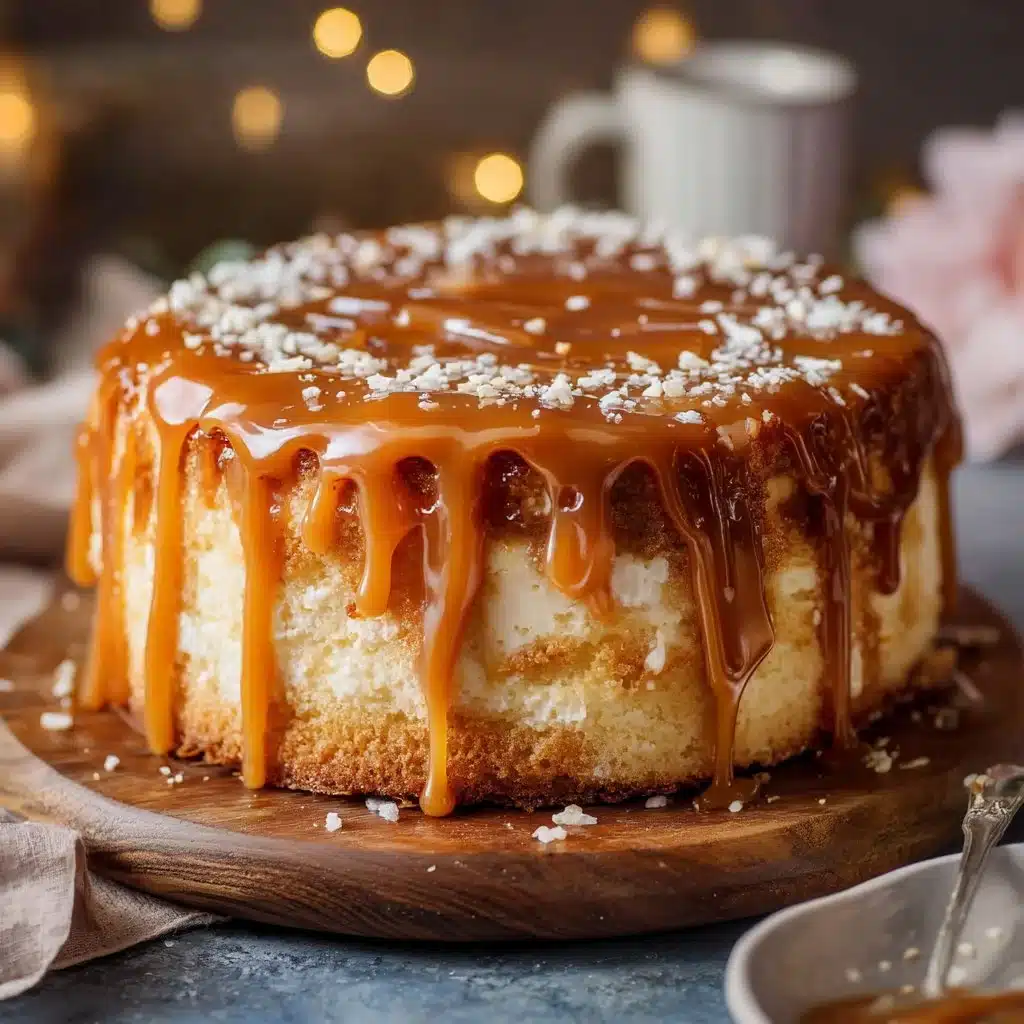
An elegant Salted Caramel Cake balances tender crumb with a glossy, amber caramel that brightens each bite. This refined take layers moist vanilla cake with a silky salted caramel sauce and a light caramel buttercream, producing contrasts of sweet, salty, and buttery textures. For another salted-caramel treat, explore these salted caramel cheesecake cookies to pair alongside dessert coffee.
Why Make This Recipe
- Effortless Yet Elegant: Classic techniques and straightforward assembly deliver a bakery-worthy centerpiece.
- Minimal Ingredients: Pantry staples combine with a simple caramel to create a complex flavor profile.
- Impressive Flavor: Salted caramel deepens the vanilla base and highlights the cake’s buttery notes.
What elevates this version is the focus on balance: a light, tender sponge that never competes with the caramel, and a sauce that is glossy, not cloying, finished with a whisper of flaky sea salt for dimension.
Ingredients
Base (two 9-inch layers)
- 2 2/3 cups (340 g) all-purpose flour, spooned and leveled
- 1 1/2 cups (300 g) granulated sugar
- 1 cup (227 g) unsalted butter, room temperature, cut into pieces
- 3 large eggs, room temperature
- 1 cup (240 ml) whole milk, warmed slightly
- 2 teaspoons baking powder
- 1/2 teaspoon fine sea salt
- 2 teaspoons pure vanilla extract
Salted Caramel Sauce
- 1 1/4 cups (250 g) granulated sugar
- 6 tablespoons (85 g) unsalted butter, room temperature, cubed
- 1/2 cup (120 ml) heavy cream, warmed
- 1 teaspoon fine sea salt, plus extra flaky salt for finishing
Caramel Buttercream (optional)
- 1 cup (227 g) unsalted butter, room temperature
- 3 cups (360 g) powdered sugar, sifted
- 1/3 cup (80 g) prepared salted caramel sauce (from above)
- 1–2 tablespoons heavy cream, to adjust texture
- Pinch of fine sea salt
Precision notes: use room temperature butter and eggs for even emulsification; warm the cream for caramel to avoid shock cooling; sift powdered sugar for a silky buttercream.
How to Make Salted Caramel Cake
- Preheat the oven to 350°F (175°C). Butter and line two 9-inch round pans; dust with flour, tapping out excess.
- Mini-tip: Room-temperature pans encourage even rise.
- Whisk flour, baking powder, and salt in a bowl until uniform. In a stand mixer, cream the butter and granulated sugar until pale and fluffy, about 3–4 minutes. Add eggs one at a time, scraping the bowl; mix in vanilla.
- Sensory cue: mixture should lighten in color and feel airy.
- With the mixer on low, alternate adding the dry mix and warmed milk in three additions, beginning and ending with dry ingredients. Mix until just combined; batter should be smooth and ribbon-like.
- Mini-tip: Do not overmix—overworked batter yields a dense crumb.
- Divide batter between prepared pans and smooth tops. Bake 22–28 minutes, or until a toothpick inserted into the center comes out with a few moist crumbs. Let cakes cool 10 minutes in pans, then invert onto racks to cool completely.
- Sensory cue: cake edges should pull slightly from the pan and smell warmly of butter and vanilla.
- To make the salted caramel sauce: heat sugar in a medium, heavy-bottomed saucepan over medium heat, stirring gently with a heatproof spatula until it melts to an amber liquid. Once fully melted, add the butter in pieces and stir until incorporated. Slowly pour in warmed cream while stirring; the mixture will bubble vigorously. Remove from heat and stir in salt. Let cool until slightly thickened.
- Mini-tip: Stand back when adding cream—the caramel will bubble; deglaze any browned bits to capture flavor.
- For the buttercream: beat room-temperature butter until smooth, then gradually add sifted powdered sugar. Blend in 1/3 cup of the prepared caramel and enough cream to reach a spreadable consistency. Finish with a pinch of salt and taste for balance.
- Sensory cue: buttercream should be silky and hold soft peaks.
- Assemble: place one cake layer on a serving plate, spread a thin layer of buttercream, and drizzle 2–3 tablespoons of salted caramel. Top with the second layer, frost the top and sides with remaining buttercream, and finish with a generous drizzle of reserved caramel and a sprinkle of flaky sea salt.
- Mini-tip: Chill briefly between crumb coat and final frosting for clean edges.
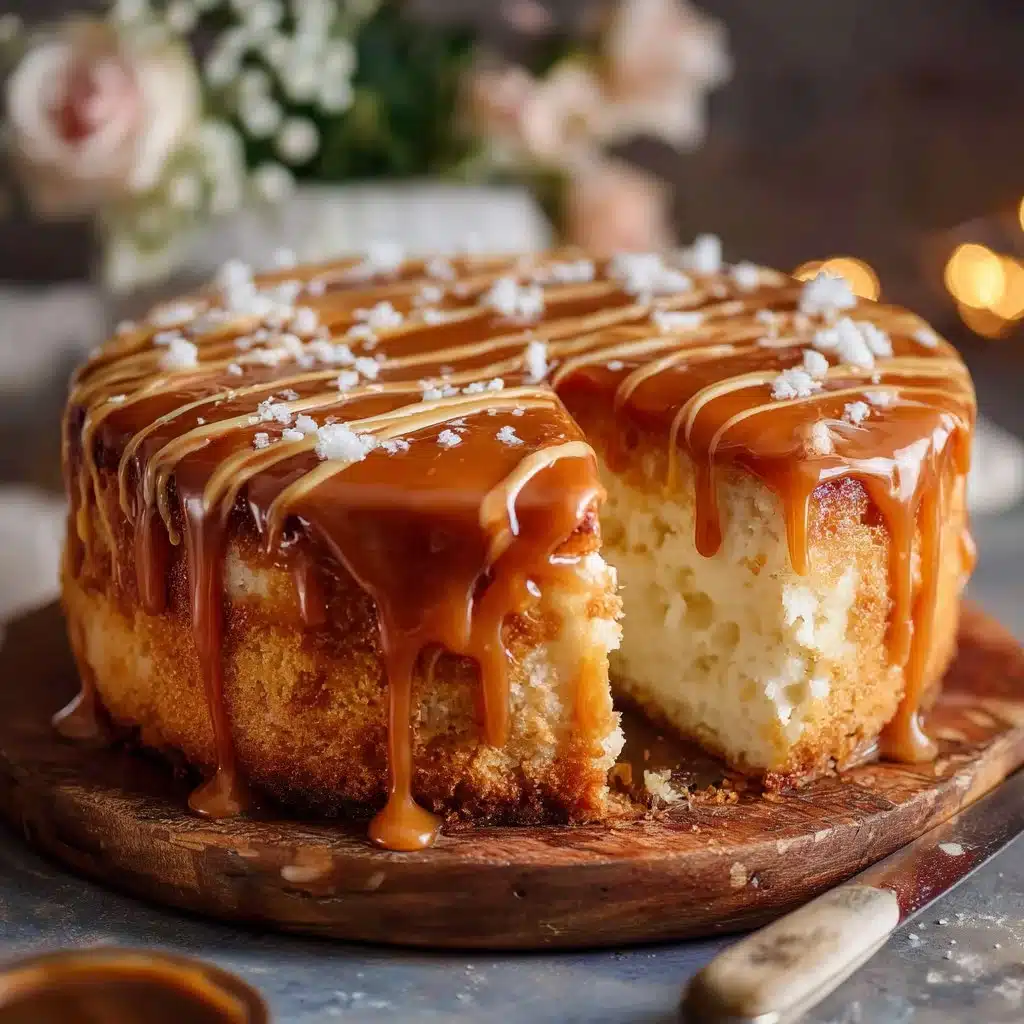
How to Serve Salted Caramel Cake
Serve thin slices on warm plates to release caramel aroma. For a refined presentation, pipe small rosettes of buttercream around the edge, spoon extra warm caramel into a small ramekin on the side, and garnish with toasted sliced almonds or a few edible gold flakes for a subtle sparkle. Pair with dark roast coffee or a short espresso to counterpoint the sweetness.
How to Store Salted Caramel Cake
- Room temperature: Keep covered in a cake dome for up to 24 hours to preserve frosting texture.
- Refrigeration: Wrap gently with plastic wrap or store in an airtight container for up to 4 days; allow to come to room temperature before serving for best texture.
- Reheating slices: Warm briefly in a 300°F (150°C) oven for 5–7 minutes to soften caramel, or microwave a single slice for 10–15 seconds on low power—watch closely to avoid melting the frosting.
Tips to Make Salted Caramel Cake
- Use warmed cream when adding to hot caramel to maintain a smooth emulsion.
- Taste the caramel incrementally for salt; start with less and add more after cooling.
- Chill layers briefly before final frosting to make clean, professional edges.
- For extra moisture, brush each layer with a teaspoon of warm caramel thinned with a touch of cream.
Variation (if any)
- Champagne-Caramel: Replace 2 tablespoons of cream with a splash of champagne in the caramel for a delicate aromatic lift.
- Nutty Accent: Fold toasted hazelnuts or pecans into a thin layer between cake and buttercream for crunch.
- Petite Portions: Bake in mini tins or make cupcakes; pipe a caramel crown onto each.
- For a contrasting dessert to serve alongside, consider a lighter dip such as this caramel apple cheesecake dip.
FAQs
How do I prevent caramel from crystallizing?
Use a clean pan and avoid stirring aggressively once the sugar starts to melt; if crystals form on the sides, brush them down with a wet pastry brush as it cooks.
Can I make the caramel ahead of time?
Yes. Store cooled caramel in an airtight jar in the refrigerator for up to two weeks. Gently warm it before using to restore pourable consistency.
Is there an egg-free version of the cake?
You can substitute each egg with 1/4 cup neutral yogurt or a commercial egg replacer, but expect a slightly denser crumb; adjust baking time as needed.
Conclusion
This Salted Caramel Cake presents a sophisticated interplay of textures: a tender, buttery sponge, satiny caramel, and a balanced buttercream finished with flaky salt. It’s a dessert that reads refined but is grounded in simple technique—ideal for celebrations or a quiet, elegant finish to a dinner. If you’d like more inspiration on caramel-centered desserts, consult this Caramel Cake (Salted Caramel Cake) – Liv for Cake for alternate methods and visual guidance. Share your results and variations in the comments or on social media — how would you make this dish your own?
Print
Salted Caramel Cake
- Total Time: 58 minutes
- Yield: 8 servings 1x
- Diet: Vegetarian
Description
An elegant Salted Caramel Cake features a tender crumb and glossy caramel sauce, balanced by a light caramel buttercream for an exquisite dessert experience.
Ingredients
- 2 2/3 cups (340 g) all-purpose flour, spooned and leveled
- 1 1/2 cups (300 g) granulated sugar
- 1 cup (227 g) unsalted butter, room temperature, cut into pieces
- 3 large eggs, room temperature
- 1 cup (240 ml) whole milk, warmed slightly
- 2 teaspoons baking powder
- 1/2 teaspoon fine sea salt
- 2 teaspoons pure vanilla extract
- 1 1/4 cups (250 g) granulated sugar (for caramel sauce)
- 6 tablespoons (85 g) unsalted butter, room temperature, cubed (for caramel sauce)
- 1/2 cup (120 ml) heavy cream, warmed (for caramel sauce)
- 1 teaspoon fine sea salt (for caramel sauce)
- 1 cup (227 g) unsalted butter, room temperature (for buttercream)
- 3 cups (360 g) powdered sugar, sifted (for buttercream)
- 1/3 cup (80 g) prepared salted caramel sauce (for buttercream)
- 1–2 tablespoons heavy cream (for buttercream)
- Pinch of fine sea salt (for buttercream)
Instructions
- Preheat the oven to 350°F (175°C). Butter and line two 9-inch round pans; dust with flour.
- Whisk flour, baking powder, and salt until uniform.
- Cream butter and granulated sugar until pale and fluffy, about 3–4 minutes. Add eggs one at a time, mix in vanilla.
- Alternate adding the dry mix and warmed milk in three additions, mix until just combined.
- Divide batter between prepared pans and smooth tops. Bake 22–28 minutes or until a toothpick comes out with a few moist crumbs. Let cool for 10 minutes in pans, then invert onto racks to cool completely.
- To make the salted caramel sauce: heat sugar in a saucepan over medium heat until melted to an amber liquid. Add butter in pieces and stir. Slowly pour in warmed cream while stirring, then remove from heat and stir in salt. Let cool until slightly thickened.
- For the buttercream, beat butter until smooth, then gradually add sifted powdered sugar. Blend in 1/3 cup of caramel and enough cream to reach a spreadable consistency. Add a pinch of salt.
- Assemble: place one cake layer on a serving plate, spread buttercream, drizzle with salted caramel, top with second layer, frost with remaining buttercream, and finish with reserved caramel and flaky sea salt.
Notes
Serve with a drizzle of warm caramel and garnish with toasted almonds or edible gold flakes for flair. Can be stored covered in a cake dome at room temperature for up to 24 hours.
- Prep Time: 30 minutes
- Cook Time: 28 minutes
- Category: Dessert
- Method: Baking
- Cuisine: American
Nutrition
- Serving Size: 1 slice
- Calories: 450
- Sugar: 35g
- Sodium: 300mg
- Fat: 20g
- Saturated Fat: 10g
- Unsaturated Fat: 8g
- Trans Fat: 0g
- Carbohydrates: 55g
- Fiber: 1g
- Protein: 4g
- Cholesterol: 60mg