
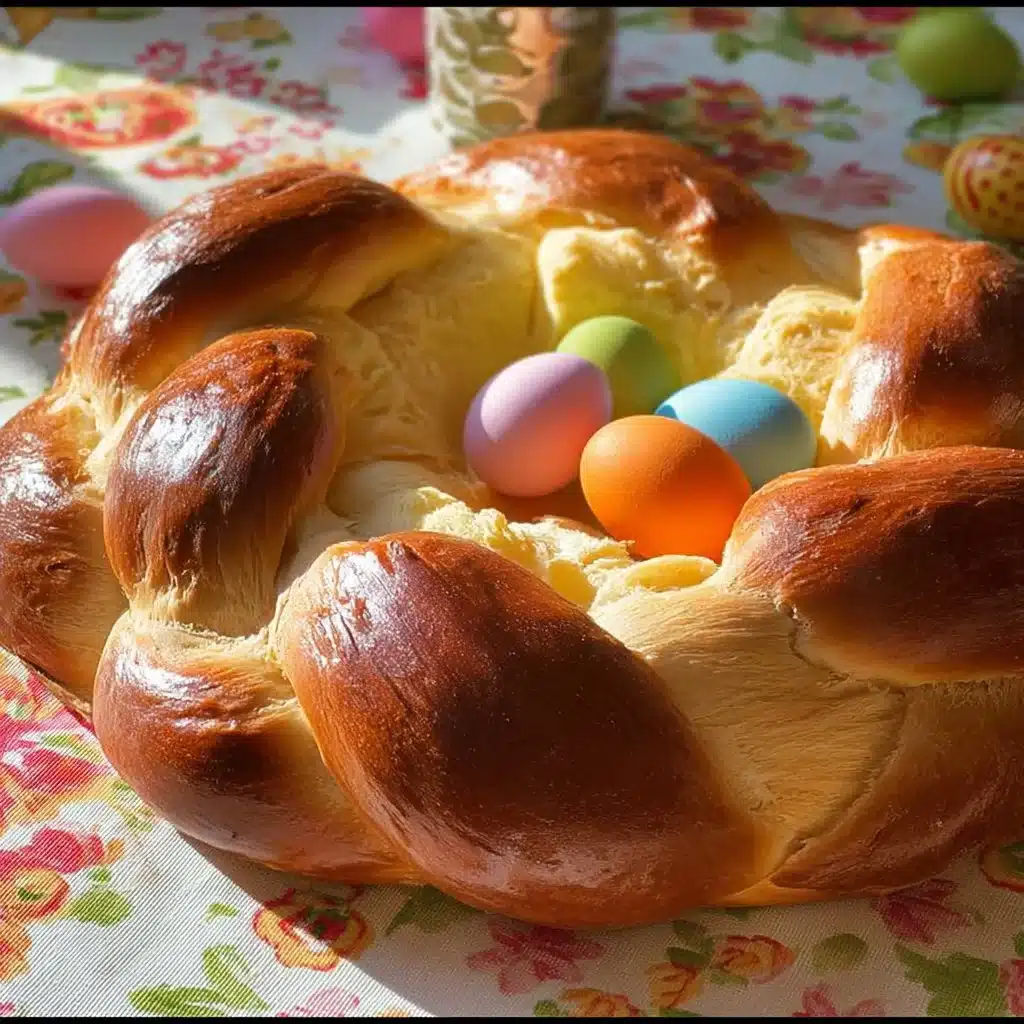
A refined take on classic Easter Bread, bright with citrus and tender as brioche. Easter Bread balances an enriched, buttery dough with a delicate orange-flower glaze for a polished finish. The braid’s glossy crust and soft, pillowy crumb feel festive yet restrained — ideal when you want an elegant centerpiece. For another simple, seasonal treat that pairs beautifully, see our 3-ingredient rhubarb squares.
Why Make This Recipe
- Effortless Yet Elegant — A straightforward dough yields a showstopping loaf with minimal fuss.
- Minimal Ingredients — Pantry staples combine with a few bright accents (citrus, vanilla) to create complexity.
- Impressive Flavor — The subtle orange and vanilla notes lift the rich, buttery crumb into something special.
This version elevates traditional Easter bread with a light orange blossom glaze and optional slivered almonds for texture, producing refined contrasts of crunch and silkiness that outshine ordinary sweet breads.
Ingredients
Base (dough)
- 4 cups (500 g) all-purpose flour, plus extra for dusting
- 1/3 cup (65 g) granulated sugar
- 2 1/4 tsp (1 packet) active dry yeast
- 1 tsp fine sea salt
- 3 large eggs, room temperature
- 1/2 cup (120 ml) whole milk, warmed to about 100–110°F (warm to the touch)
- 6 tbsp (85 g) unsalted butter, room temperature and softened
- Zest of 1 orange, finely grated
Glaze (sauce)
- 1 cup (120 g) powdered sugar, sifted
- 2–3 tbsp fresh orange juice (adjust to reach a pourable consistency)
- 1/4 tsp orange blossom water or vanilla extract (optional for floral note)
Topping
- 2 tbsp sliced almonds, lightly toasted
- Coarse pearl sugar or sanding sugar for sparkle
- Optional: 3 dyed eggs to braid into the loaf (hard-boiled and dry)
Precision notes: use room temperature butter and eggs for a smooth dough; warm milk activates the yeast; orange zest should be finely grated to avoid bitter pith.
How to Make Easter Bread:
- Activate the yeast: combine warm milk, a pinch of sugar, and yeast in a small bowl. Let sit 5–8 minutes until foamy. (Tip: water that’s too hot will kill the yeast; aim for pleasantly warm.)
- Mix dry ingredients: whisk flour, sugar, and salt in a large mixing bowl. Stir in orange zest for even citrus aroma.
- Combine and knead: add eggs and the yeast mixture to the flour. Mix until a shaggy dough forms, then add softened butter in pieces. Knead by hand or in a stand mixer with a dough hook for 8–10 minutes until smooth, elastic, and slightly tacky. (Texture cue: the dough should stretch without tearing — the windowpane test indicates proper gluten development.)
- First rise: place dough in a lightly oiled bowl, cover with plastic wrap or a damp towel, and proof in a warm spot until doubled, about 1–1.5 hours. (Mini-tip: proof near a warm oven; a doubled dough will feel airy and hold a gentle indentation.)
- Shape: divide dough into three equal ropes and gently roll until even. Braid loosely, tucking ends under; if using dyed eggs, nestle them into the braid where desired. (Sensory cue: the surface should be smooth and slightly glossy.)
- Second rise: transfer the loaf to a parchment-lined sheet and let it rise 30–45 minutes until puffy but not overinflated. Preheat the oven to 350°F (175°C).
- Egg wash and bake: brush the loaf with a beaten egg for deep golden color, sprinkle with sliced almonds and pearl sugar. Bake 25–30 minutes until the crust is rich golden and the loaf sounds hollow when tapped. (Pro tip: tent with foil if browning too quickly.)
- Glaze and finish: cool 10 minutes on a rack, then brush with the orange glaze made by whisking powdered sugar, orange juice, and orange blossom water to a pourable consistency. Scatter additional zest for brightness. (Mini-tip: apply glaze while the bread is slightly warm so it adheres and soaks into the crumb.)

How to Serve Easter Bread:
Serve warm slices on a wooden board or porcelain platter. Arrange slices fanned with a smear of ricotta and a thin drizzle of honey or a side of lemon curd for a bright contrast. For a refined brunch, pair with lightly brewed tea and a small bowl of toasted almonds to echo the topping.
How to Store Easter Bread:
Cool completely before storing to prevent sogginess. At room temperature, wrap in a clean kitchen towel or place in an airtight container for up to 2 days. For longer storage, slice and freeze in a zipper bag for up to 1 month; reheat slices in a 325°F oven 8–10 minutes to revive the crust. Avoid refrigeration, which will dry the crumb.
Tips to Make Easter Bread:
- Use room-temperature ingredients to ensure even mixing and a fine crumb.
- For a glossy finish, double-brush with egg wash: once before baking, once mid-bake if needed.
- Toast and cool almonds before topping to intensify flavor and maintain crunch.
- If you want a richer loaf, substitute half the milk for cream or add an extra egg yolk.
For a compact sweet option that complements this loaf, try pairing a slice with our 3-ingredient rhubarb squares for contrasting tartness.
Variation (if any):
- Citrus & Pistachio: replace almonds with chopped pistachios and add 2 tbsp finely chopped candied orange peel.
- Savory twist: omit sugar, fold in 1/2 cup grated Pecorino and 2 tbsp chopped fresh rosemary; brush with olive oil instead of egg wash.
- Chocolate-studded: gently press 1/2 cup semisweet chocolate chips into the dough ropes before braiding for an indulgent finish.
FAQs
How long should the dough rise?
Expect the first rise to take 1–1.5 hours at room temperature until doubled; the second rise is shorter, about 30–45 minutes until visibly puffy.
Can I make the dough ahead of time?
Yes. After the first rise, refrigerate the dough for up to 24 hours. Bring to room temperature before shaping and proceed with the second rise.
Is active dry yeast interchangeable with instant yeast?
Yes. Use 1¾ tsp instant yeast in place of 2¼ tsp active dry yeast and mix directly with dry ingredients; reduce proofing time slightly.
How do I prevent the top from burning?
If the crust browns too quickly, tent the loaf loosely with foil during the last 10–15 minutes of baking.
Conclusion
This Easter Bread offers understated luxury: a soft, enriched crumb perfumed with orange and finished with a glossy, fragrant glaze. Its simple technique rewards with a centerpiece that tastes as elegant as it looks, ideal for holiday mornings or a refined brunch. For historical context and a classic regional take on celebratory loaves, see Pane di Pasqua | Italian Easter Bread. Share your results and variations in the comments, tag us when you post, and tell us: How would you make this dish your own?
Print
Easter Bread
- Total Time: 50 minutes
- Yield: 1 loaf 1x
- Diet: Vegetarian
Description
A refined take on classic Easter Bread, bright with citrus and tender as brioche, featuring a light orange blossom glaze and optional slivered almonds.
Ingredients
- 4 cups (500 g) all-purpose flour, plus extra for dusting
- 1/3 cup (65 g) granulated sugar
- 2 1/4 tsp (1 packet) active dry yeast
- 1 tsp fine sea salt
- 3 large eggs, room temperature
- 1/2 cup (120 ml) whole milk, warmed to about 100–110°F
- 6 tbsp (85 g) unsalted butter, room temperature and softened
- Zest of 1 orange, finely grated
- 1 cup (120 g) powdered sugar, sifted (for glaze)
- 2–3 tbsp fresh orange juice (for glaze)
- 1/4 tsp orange blossom water or vanilla extract (optional for glaze)
- 2 tbsp sliced almonds, lightly toasted (for topping)
- Coarse pearl sugar or sanding sugar (for topping)
- Optional: 3 dyed eggs to braid into the loaf (hard-boiled and dry)
Instructions
- Activate the yeast: combine warm milk, a pinch of sugar, and yeast in a small bowl. Let sit 5–8 minutes until foamy.
- Mix dry ingredients: whisk flour, sugar, and salt in a large mixing bowl. Stir in orange zest.
- Combine and knead: add eggs and the yeast mixture to the flour. Mix until a shaggy dough forms, then add softened butter. Knead by hand or in a stand mixer for 8–10 minutes.
- First rise: place dough in a lightly oiled bowl, cover, and proof in a warm spot until doubled, about 1–1.5 hours.
- Shape: divide dough into three equal ropes and braid loosely; if using dyed eggs, nestle them into the braid.
- Second rise: let the loaf rise on a parchment-lined sheet for 30–45 minutes. Preheat the oven to 350°F (175°C).
- Egg wash and bake: brush with a beaten egg, sprinkle with almonds and pearl sugar. Bake for 25–30 minutes.
- Glaze and finish: cool 10 minutes then brush with the orange glaze. Scatter additional zest for brightness.
Notes
Use room-temperature ingredients for even mixing. Double-brush with egg wash for a glossy finish. Store leftovers wrapped at room temperature for up to 2 days or freeze for up to 1 month.
- Prep Time: 20 minutes
- Cook Time: 30 minutes
- Category: Bread
- Method: Baking
- Cuisine: Italian
Nutrition
- Serving Size: 1 slice
- Calories: 350
- Sugar: 8g
- Sodium: 300mg
- Fat: 12g
- Saturated Fat: 7g
- Unsaturated Fat: 5g
- Trans Fat: 0g
- Carbohydrates: 45g
- Fiber: 2g
- Protein: 9g
- Cholesterol: 70mg