

Homemade Easy Bagels arrive at the table with a glossy crust, dense crumb, and a gentle chew—simple pleasures done exceptionally well. This recipe refines the classic by using a short, hands-on method that yields a golden-brown exterior and a tender, slightly sweet interior. For a weekend breakfast or an elegant brunch, these bagels pair beautifully with creamy spreads or smoked fish; try them alongside an airy savory like our air-fryer quesadilla recipe for a playful contrast.
Why Make This Recipe
- Effortless Yet Elegant: modest steps produce a bakery-style finish.
- Minimal Ingredients: pantry staples form the backbone of flavor and texture.
- Impressive Flavor: a brief boil with baking soda encourages a deep, caramelized crust.
This approach elevates the ordinary by focusing on technique—tight shaping, a bath that encourages browning, and a precise bake. The result is a bagel that is crisp outside, chewy inside, and versatile enough to dress up or keep simply salted.
Ingredients
Base
- 4 cups (500 g) bread flour — high-protein for chew.
- 1 1/4 cups (300 ml) lukewarm water (about 105°F / 40°C) — not hot.
- 2 1/4 tsp (1 packet) active dry yeast — proof if unsure.
- 2 tbsp granulated sugar or barley malt syrup — for slight sweetness and color.
- 1 1/2 tsp fine sea salt.
Boiling solution
- 6 cups water.
- 2 tbsp baking soda — encourages a golden, blistered crust.
- 1 tbsp malt syrup or honey (optional) — for added shine.
Finish and toppings
- 1 egg, beaten with 1 tsp water (egg wash) — for gloss.
- 2 tbsp sesame seeds, poppy seeds, or “everything” seasoning.
- Lightly oiled baking sheet or parchment.
Precision notes: use bread flour for structure; lukewarm water activates yeast without killing it; malt syrup may be substituted with honey.
How to Make Homemade Easy Bagels
- Activate the yeast: Stir yeast and sugar into lukewarm water. Let rest 5–7 minutes until foamy. The surface should show small bubbles and a yeasty aroma.
- Mini-tip: If the mixture doesn’t foam, try fresh yeast or warmer water.
- Mix and knead: In a mixing bowl combine flour and salt. Add the yeast mixture and mix until a shaggy dough forms. Knead 8–10 minutes by hand (or 6–7 in a stand mixer) until smooth, elastic, and slightly tacky. The dough will feel firm and spring back when pressed.
- Mini-tip: Use a bench scrape to keep the dough tidy and gauge elasticity.
- First rise: Form a loose ball, oil lightly, and place in a covered bowl. Let rise 45–60 minutes until just puffy but not doubled. You want a slight springiness when gently pressed.
- Mini-tip: A warm, draft-free spot speeds this step—an oven with the light on works well.
- Shape the bagels: Deflate gently and divide into 8 equal pieces. Roll each into a smooth ball, then either poke a hole through the center with your thumb and stretch to a 1½–2 inch opening or roll into a rope and join the ends. Aim for even thickness for uniform baking.
- Mini-tip: Wetting your thumb slightly helps form a smooth central ring.
- Rest briefly: Place shaped bagels on a lightly floured surface, cover, and rest 15 minutes to relax the gluten—this makes a neater crust and prevents shrinkage.
- Preheat and prepare the bath: Preheat oven to 425°F (220°C). Bring 6 cups water to a gentle boil in a wide pot. Add baking soda and optional malt syrup; it will foam and scent slightly caramelized.
- Mini-tip: Reduce heat to maintain a gentle simmer—vigorous boiling can distort shapes.
- Poach the bagels: Slide 2–3 bagels at a time into the simmering water for 45–60 seconds per side. They should puff slightly and develop a taut, shiny skin. Use a slotted spoon to transfer to a parchment-lined sheet.
- Mini-tip: Deglaze the pan after by simmering remaining liquid if you plan to reuse flavors in another recipe.
- Egg wash and top: Brush each bagel with egg wash, sprinkle desired toppings evenly, and press lightly so they adhere. You’ll see the surface go glossy and margins pick up seeds.
- Bake: Bake for 18–22 minutes until deep golden brown and the bottom sounds hollow when tapped. The smell will be toasty with a subtle caramel note. Cool on a wire rack 15 minutes before slicing to set the crumb.
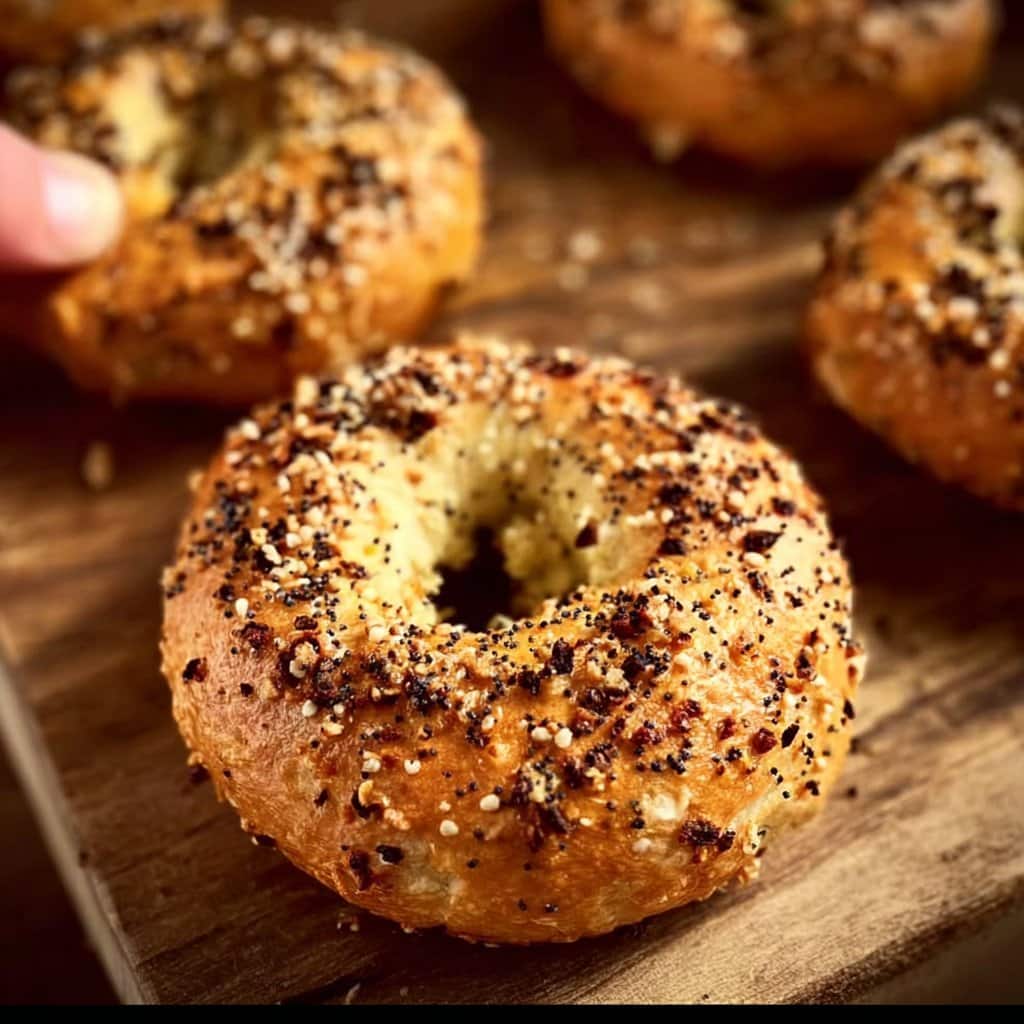
How to Serve Homemade Easy Bagels
Present bagels halved, toasted lightly to reveal a warm, tender interior with a crisp rim. For an elegant plate, pair a sesame bagel with whipped labneh, a drizzle of olive oil, and microgreens; arrange smoked salmon rosettes, thinly sliced cucumber, and a lemon wedge on the side. For a modern brunch, stack a plain bagel with herbed goat cheese, arugula, and a soft-poached egg for textural contrast. Consider small ramekins of preserves or compound butter for variety—try our quick butter chicken as a bold, savory accompaniment for a fusion twist.
How to Store Homemade Easy Bagels
Cool completely before storing to prevent sogginess. For same-day enjoyment, keep bagels in a paper bag inside a loose plastic bag at room temperature—this preserves crust without trapping too much steam. For longer storage, slice and freeze in a zip-top bag; toast or reheat frozen halves directly for best texture. To refresh, bake at 350°F (175°C) for 8–10 minutes or toast until the crumb warms and the edges crisp.
Tips to Make Homemade Easy Bagels
- Use bread flour for optimal chew; all-purpose will work but yields a softer bite.
- Don’t overproof—slightly underproofed dough yields a denser, more satisfyingly chewy bagel.
- Boil briefly and at a gentle simmer; a longer boil increases crust blistering but can reduce internal moisture.
- Apply toppings immediately after the egg wash so they adhere and toast evenly.
- For consistent shapes, weigh dough portions and roll to uniform thickness.
Variation (if any)
- Whole wheat and rye: replace up to 30% of bread flour with whole wheat or rye for nutty depth.
- Sourdough: swap commercial yeast for 150 g active sourdough starter and extend the bulk fermentation for a tangy profile.
- Sweet options: add cinnamon and raisins to the dough, finish with a light sugar glaze after baking for a refined breakfast treat.
- Presentation upgrade: serve mini bagels as canapés topped with crème fraîche, dill, and caviar for an elegant appetizer.
FAQs
How long do bagels keep fresh at room temperature?
Store cooled bagels in a loose plastic bag for up to 2 days. For longer storage, slice and freeze immediately—frozen bagels keep well for up to 3 months.
Can I use instant yeast instead of active dry yeast?
Yes. Use the same quantity of instant yeast and mix it directly into the flour; you can shorten the proofing time slightly if the dough rises faster.
Why do my bagels turn out too dense?
Dense bagels often result from under-kneading, insufficient gluten development, or overproofing. Ensure a smooth, elastic dough and bake when the dough is just puffy, not fully collapsed.
Is malt syrup essential?
No—malt syrup boosts color and traditional bagel flavor, but you can substitute honey or simple sugar in both the dough and the boiling water.
Conclusion
These Homemade Easy Bagels offer a refined take on a beloved classic—crisply caramelized exteriors, resilient chew, and a clean flavor profile that welcomes creative toppings. The method focuses on texture and timing, producing consistent results with modest effort. For additional technique inspiration and alternative quick methods, explore Easy Homemade Bagel Recipe (In 60 Minutes) – Sugar Geek Show and a complementary approach at Easy Homemade Bagels – Beyond the Butter. Share your plating ideas or tweaks in the comments — how would you make this dish your own?
Print
Homemade Easy Bagels
- Total Time: 45 minutes
- Yield: 8 bagels 1x
- Diet: Vegetarian
Description
Delicious homemade bagels with a glossy crust and chewy interior, perfect for breakfast or brunch.
Ingredients
- 4 cups (500 g) bread flour
- 1 1/4 cups (300 ml) lukewarm water
- 2 1/4 tsp active dry yeast
- 2 tbsp granulated sugar or barley malt syrup
- 1 1/2 tsp fine sea salt
- 6 cups water (for boiling)
- 2 tbsp baking soda
- 1 tbsp malt syrup or honey (optional)
- 1 egg, beaten with 1 tsp water (egg wash)
- 2 tbsp sesame seeds, poppy seeds, or “everything” seasoning
- Lightly oiled baking sheet or parchment
Instructions
- Activate the yeast: Stir yeast and sugar into lukewarm water. Let rest 5–7 minutes until foamy.
- Mix and knead: Combine flour and salt in a mixing bowl. Add the yeast mixture and mix until a shaggy dough forms.
- Knead the dough by hand for 8–10 minutes until smooth and elastic.
- Form a loose ball, oil lightly, and place in a covered bowl to rise for 45–60 minutes.
- Shape the bagels: Divide into 8 equal pieces and shape into bagels.
- Rest the shaped bagels on a floured surface for 15 minutes.
- Preheat the oven to 425°F (220°C) and prepare the boiling water.
- Poach the bagels in simmering water for 45–60 seconds per side.
- Brush each bagel with egg wash and sprinkle toppings.
- Bake for 18–22 minutes until deep golden brown.
- Cool on a wire rack for 15 minutes before slicing.
Notes
For best results, use high-protein bread flour. Adjust proofing times as needed for warmer environments.
- Prep Time: 15 minutes
- Cook Time: 30 minutes
- Category: Bread
- Method: Baking
- Cuisine: American
Nutrition
- Serving Size: 1 bagel
- Calories: 250
- Sugar: 2g
- Sodium: 400mg
- Fat: 4g
- Saturated Fat: 1g
- Unsaturated Fat: 2g
- Trans Fat: 0g
- Carbohydrates: 46g
- Fiber: 2g
- Protein: 10g
- Cholesterol: 20mg