
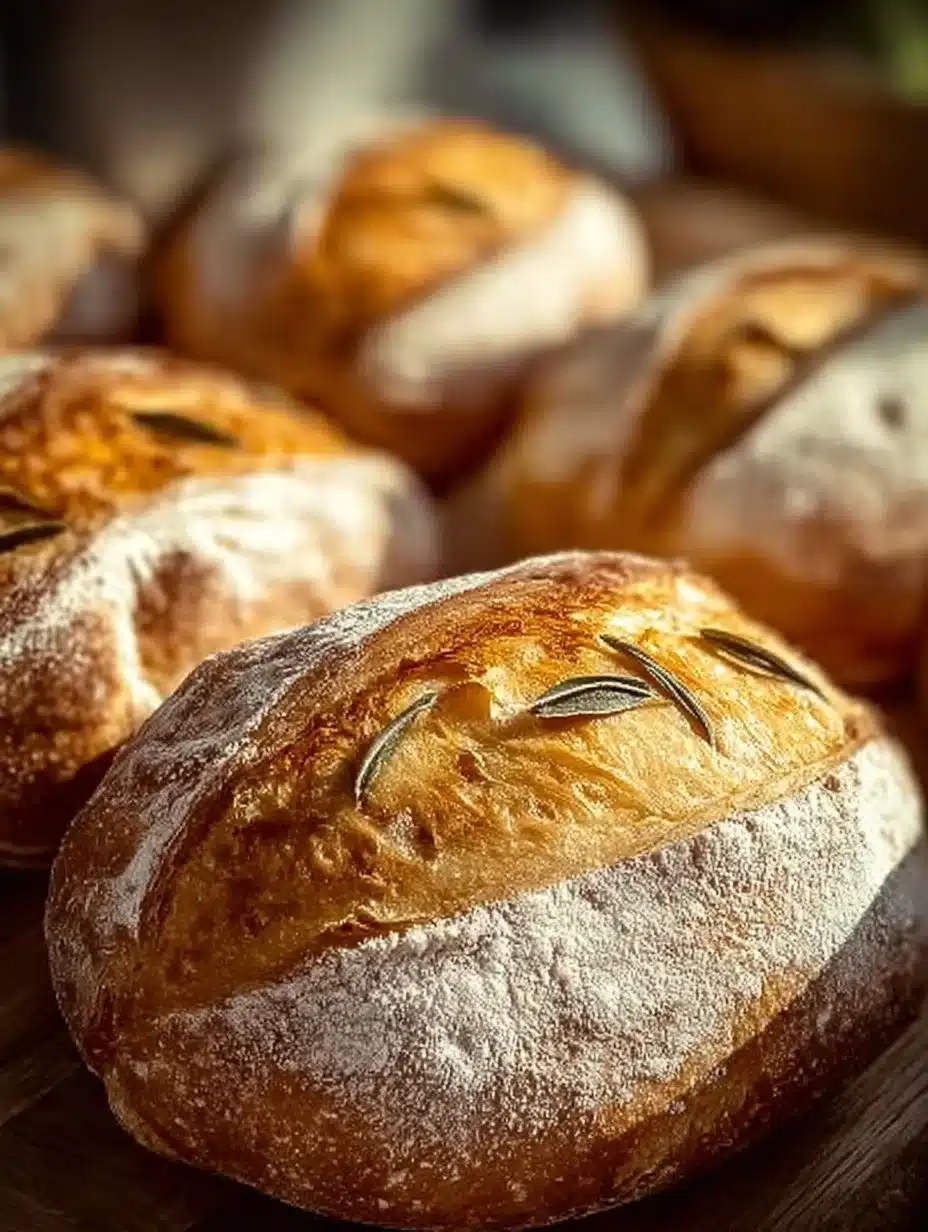
Crusty Italian Bread announces itself with a bronzed, crackling crust and an airy, honeycombed crumb. This loaf elevates simple ingredients through careful fermentation and high-heat baking for a refined, bakery-quality finish. For a different crisp approach, compare techniques with our air fryer bread guide — the contrast highlights how heat and steam sculpt texture and aroma.
Why Make This Recipe
- Effortless Yet Elegant: A straightforward dough yields bakery-worthy structure.
- Minimal Ingredients: Pure flour, water, yeast, and salt deliver complex flavor.
- Impressive Flavor: Long fermentation deepens taste and creates a glossy, blistered crust.
This version stands above ordinary loaves by favoring hydration and a gentle rise to develop open crumb and subtle tang. The high-heat bake with steam gives a satisfying crackle and an aromatic, toasty finish that complements savory or simple butter-forward servings.
Ingredients
Base
- 500 g (about 4 cups) bread flour — high-protein for structure
- 350 ml (1 1/2 cups) lukewarm water — room temperature to slightly warm
- 2 tsp (7 g) active dry yeast — rehydrated in water or mixed directly
- 2 tsp (12 g) fine sea salt — add after initial autolyse
Sauce / Enrichment (optional)
- 1–2 tbsp extra-virgin olive oil — for a softer crumb (room temperature)
Topping
- Semolina or fine cornmeal for dusting — creates a crisp base
- Optional coarse sea salt or fresh herbs, finely chopped, for finishing
Precision notes: measure flour by weight for consistency; salt and yeast should not touch directly during mixing; fresh herbs finely chopped.
How to Make Crusty Italian Bread
- Combine flour and water in a large bowl until no dry streaks remain. Cover and rest 20–30 minutes (autolyse). The dough will appear shaggy and slightly tacky.
- Mini-tip: Autolyse improves extensibility and flavor.
- Sprinkle yeast over the dough (or add dissolved yeast), then add salt. Mix by folding and kneading in the bowl until the dough smooths and holds shape, about 6–8 minutes by hand. Expect a soft, slightly elastic texture.
- Mini-tip: A bench scrape helps maintain tension while kneading.
- Transfer to a lightly oiled bowl, cover, and bulk ferment at room temperature 1–1.5 hours, folding the dough every 30 minutes. Look for a 30–50% rise and airy bubbles beneath the surface.
- Mini-tip: Folding builds structure without heavy kneading.
- Shape gently into a bâtard or loaf on a floured work surface—preserve interior gas for open crumb. Place on a semolina-dusted couche or parchment, seam-side down, and cover for the final proof 45–60 minutes until slightly puffy. The finger dent should slowly spring back.
- Mini-tip: Avoid overproofing; a too-flat spring indicates overproof.
- Preheat oven to 475°F (245°C) with a baking stone or heavy sheet inside. Place a shallow pan on the lower rack for steam. Score the loaf with a sharp lame or razor—make confident, swift cuts for elegant ear formation.
- Mini-tip: Scoring depth of about 1/4–1/2 inch yields pronounced ears.
- Slide the loaf onto the hot stone, pour 1 cup of hot water into the preheated pan to create steam, and close the oven. Bake 20 minutes with steam, then remove the pan and reduce temperature to 425°F (220°C), baking another 10–15 minutes until the crust is deeply golden-brown and sounds hollow when tapped. The internal temperature should read ~200–205°F (93–96°C).
- Mini-tip: Rotate the loaf midway for even color; deglaze the pan afterwards to capture flavor for sauces.
- Cool on a wire rack at least 1 hour before slicing to let the crumb set; the crust will crisp further as it cools.
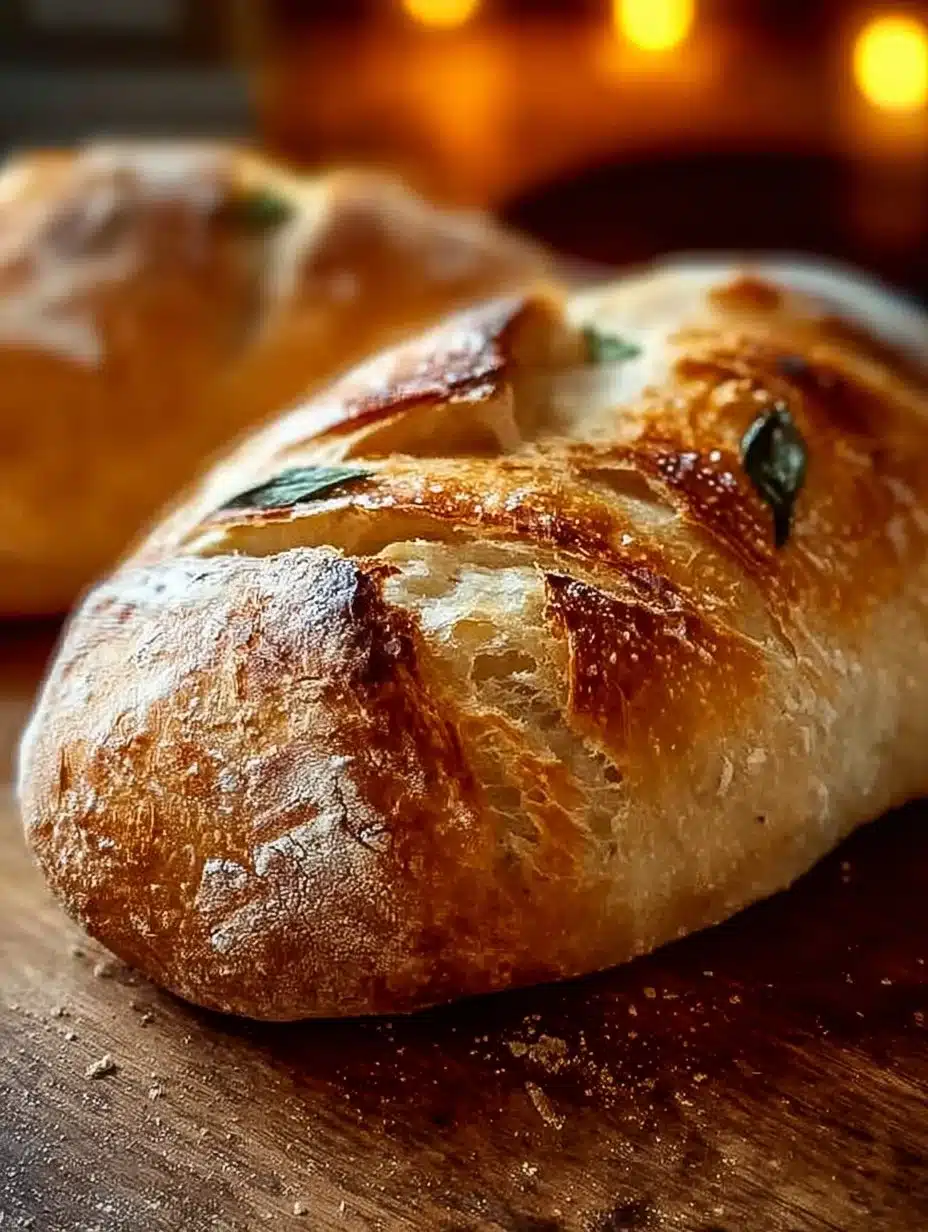
- Sensory cue: The finished loaf should smell toasty and slightly nutty, with a crisp crackle to the crust and a tender, irregular crumb.
How to Serve Crusty Italian Bread
Serve thick slices with quality olive oil and a scatter of sea salt, or present thinly shaved with aged Parmigiano-Reggiano and a drizzle of balsamic reduction for contrast. For an elegant table, arrange warm slices in a linen-lined bread basket and pair with a small ramekin of herb-infused butter. Toasted crostini topped with whipped ricotta and lemon zest offers refined textural interplay.
Include a suggestion that a lightly toasted slice complements sweet elements—this technique mirrors ideas from the Amish apple fritter bread recipe when combining crisp textures with richer toppings.
How to Store Crusty Italian Bread
Cool completely before storing. For same-day use, keep loosely wrapped in a cotton bag or bread box to preserve crust while preventing staleness. For longer storage, slice and freeze in an airtight bag; reheat directly from frozen in a 375°F (190°C) oven for 8–10 minutes to restore crust. Avoid refrigerating—cold shortens shelf life and dulls texture.
Tips to Make Crusty Italian Bread
- Use a baking stone or heavy steel for rapid heat transfer and a better oven spring.
- Create steam for the first 20 minutes of baking to encourage blistering and a thin, crackly crust.
- Weigh ingredients for consistent results; hydration is key to an open crumb.
- Score decisively—shallow, hesitant cuts won’t produce an ear.
- Allow a full cool to set the crumb; slicing too soon yields a gummy interior.
Variation (if any)
- Herb and Olive: Fold in 2 tbsp finely chopped rosemary and 1/4 cup pitted, chopped olives at the last fold for a rustic, savory loaf.
- Semolina Crust: Replace a quarter cup of bread flour with semolina for a golden, slightly nutty crust.
- Mini Boules: Shape smaller rolls and bake 12–15 minutes for elegant dinner rolls or canapés.
FAQs
How long should I proof the dough?
Proofing times vary by room temperature; expect 1–1.5 hours for bulk fermentation and 45–60 minutes for the final proof. Look for a gentle expansion and a slowly springing finger dent.
Can I use all-purpose flour instead of bread flour?
Yes. All-purpose flour works, though the crumb will be slightly less structured and more tender. Consider a longer kneading time or brief stretch-and-folds to develop strength.
How do I get a really crisp crust?
Bake at high heat on a preheated stone, introduce steam for the first 15–20 minutes, and finish uncovered. Cool on a rack to allow moisture to escape and the crust to firm.
Is sourdough starter an acceptable substitute for commercial yeast?
Absolutely. Replace the yeast with 150–200 g active starter and reduce water slightly; extend fermentation until the dough shows pronounced rise and flavor development.
Conclusion
This Crusty Italian Bread proves that simplicity and technique produce a loaf both elegant and elemental: bronzed, aromatic crust; airy, flavorful crumb. The method rewards patience—hydration and steam do the heavy lifting—resulting in a refined centerpiece for any meal. For a complementary visual and step-by-step demonstration, see the Rustic Italian Crusty Bread Recipe Video – Ciao Florentina. How would you make this dish your own? Share your adaptations and photos in the comments and on social media.
Print
Crusty Italian Bread
- Total Time: 1 hour 5 minutes
- Yield: 1 loaf 1x
- Diet: Vegetarian
Description
This Crusty Italian Bread features a bronzed, crackling crust and an airy, honeycombed crumb, elevating simple ingredients through high-heat baking.
Ingredients
- 500 g (about 4 cups) bread flour
- 350 ml (1 1/2 cups) lukewarm water
- 2 tsp (7 g) active dry yeast
- 2 tsp (12 g) fine sea salt
- 1–2 tbsp extra-virgin olive oil (optional)
- Semolina or fine cornmeal for dusting
- Coarse sea salt or fresh herbs, finely chopped (optional)
Instructions
- Combine flour and water in a large bowl until no dry streaks remain. Cover and rest 20–30 minutes (autolyse).
- Sprinkle yeast over the dough (or add dissolved yeast), then add salt. Mix by folding and kneading in the bowl until the dough smooths and holds shape, about 6–8 minutes by hand.
- Transfer to a lightly oiled bowl, cover, and bulk ferment at room temperature 1–1.5 hours, folding the dough every 30 minutes.
- Shape gently into a bâtard or loaf on a floured work surface.
- Place on a semolina-dusted couche or parchment, seam-side down, and cover for the final proof 45–60 minutes.
- Preheat oven to 475°F (245°C) with a baking stone or heavy sheet inside.
- Score the loaf with a sharp lame or razor.
- Slide the loaf onto the hot stone, pour hot water into the preheated pan to create steam, and close the oven.
- Bake for 20 minutes with steam, then remove the pan and reduce temperature to 425°F (220°C) for another 10–15 minutes.
- Cool on a wire rack at least 1 hour before slicing.
Notes
Use a baking stone for better oven spring and create steam for the first 20 minutes of baking.
- Prep Time: 30 minutes
- Cook Time: 35 minutes
- Category: Bakery
- Method: Baking
- Cuisine: Italian
Nutrition
- Serving Size: 1 slice
- Calories: 150
- Sugar: 0g
- Sodium: 120mg
- Fat: 1g
- Saturated Fat: 0g
- Unsaturated Fat: 1g
- Trans Fat: 0g
- Carbohydrates: 30g
- Fiber: 1g
- Protein: 5g
- Cholesterol: 0mg