
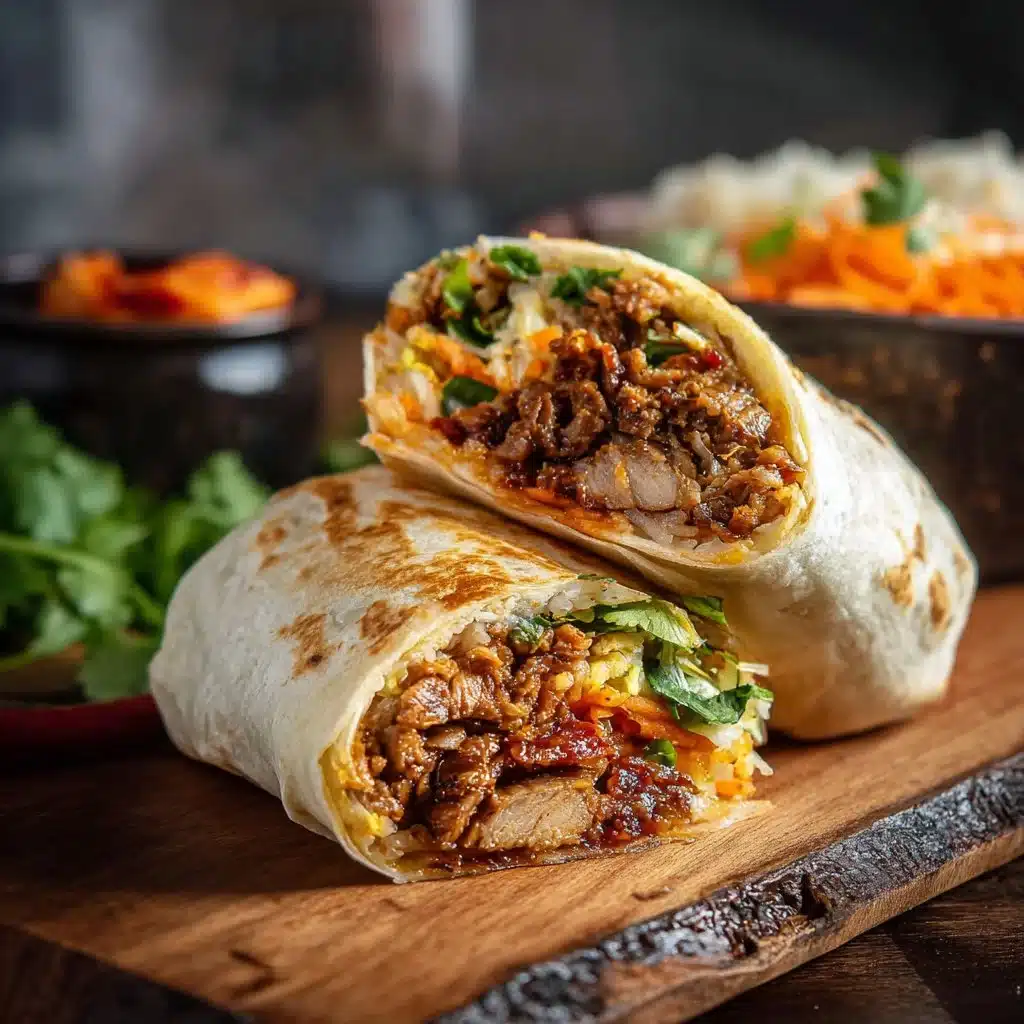
An elegant Korean Burrito reframes bold Korean flavors inside a soft, warm tortilla for a refined handheld experience. Crisp-tossed vegetables, caramelized bulgogi-style beef, and a silky gochujang-mayo create a lively contrast of heat, umami, and crunch. This interpretation elevates the classic by emphasizing precise textures and layered sauces, marrying street-food comfort with plated sophistication. For a lighter base pairing, see this cauliflower rice chicken burrito bowl for inspiration.
Why Make This Recipe
- Effortless Yet Elegant: Quick searing and an assembly line approach create restaurant-quality depth without fuss.
- Minimal Ingredients: Focus on high-impact components — marinated beef, a single punchy sauce, and fresh crunchy veg.
- Impressive Flavor: Gochujang and toasted sesame lift savory beef; acidic pickles cut through the richness.
This rendition refines the ordinary by prioritizing texture contrast — glossy, sticky beef against crisp slaw — and by finishing with bright vinegar and sesame oil to keep the palate lively.
Ingredients
Base
- 4 large flour tortillas, warmed (soft and pliable)
- 2 cups cooked short-grain rice, hot (optional for heartier burritos)
Protein
- 1 lb thinly sliced beef ribeye or sirloin
- 2 tbsp soy sauce, low-sodium
- 1 tbsp mirin or dry sherry
- 1 tbsp brown sugar, packed
- 1 tsp toasted sesame oil
Sauce
- 3 tbsp mayonnaise, room temperature
- 1–2 tbsp gochujang (adjust to taste)
- 1 tsp rice vinegar, plus more if needed
- 1 tsp honey
Topping
- 2 cups shredded Napa cabbage or romaine, crisp
- 1 small carrot, julienned
- 2 green onions, thinly sliced
- 1 tbsp sesame seeds, toasted
- Quick pickles: 1/4 cup rice vinegar, 1 tbsp sugar, pinch salt (thinly sliced cucumber or red onion)
Precision notes: slice beef very thin against the grain; keep mayonnaise at room temperature for a smooth sauce; finely chop green onions.
How to Make Korean Burrito:
- Marinate the beef: combine soy, mirin, brown sugar, and sesame oil. Toss beef until glossy and let rest 15–20 minutes to absorb flavor. Tip: marinate briefly — thin slices pick up flavor quickly.
- Make quick pickles: whisk rice vinegar, sugar, and salt; submerge cucumber or onion slices for 10 minutes until slightly translucent and tangy. Sensory cue: pickles should taste bright, not cloying.
- Prepare sauce: whisk mayonnaise, gochujang, rice vinegar, and honey until silky. Adjust acidity for balance; the sauce should coat without running.
- Sear the beef: heat a heavy skillet over high heat until shimmering. Add a drizzle of oil and lay beef in a single layer. Cook until edges caramelize and meat is just cooked through (about 1–2 minutes per side). Smell should be nutty and savory. Mini-tip: deglaze the pan with a splash of mirin or water to capture all browned fond.
- Toss slaw: combine shredded cabbage, carrot, and green onions with a light splash of sesame oil and a pinch of salt; aim for crunchy snap.
- Assemble: warm tortillas, spread a thin layer of gochujang mayo, add rice (if using), layer beef, top with slaw and quick pickles, and finish with toasted sesame seeds. Roll tightly, folding ends inward. Sensory cue: the finished burrito should feel warm and slightly weighty, with a visible sheen from the sauce.
How to Serve Korean Burrito:
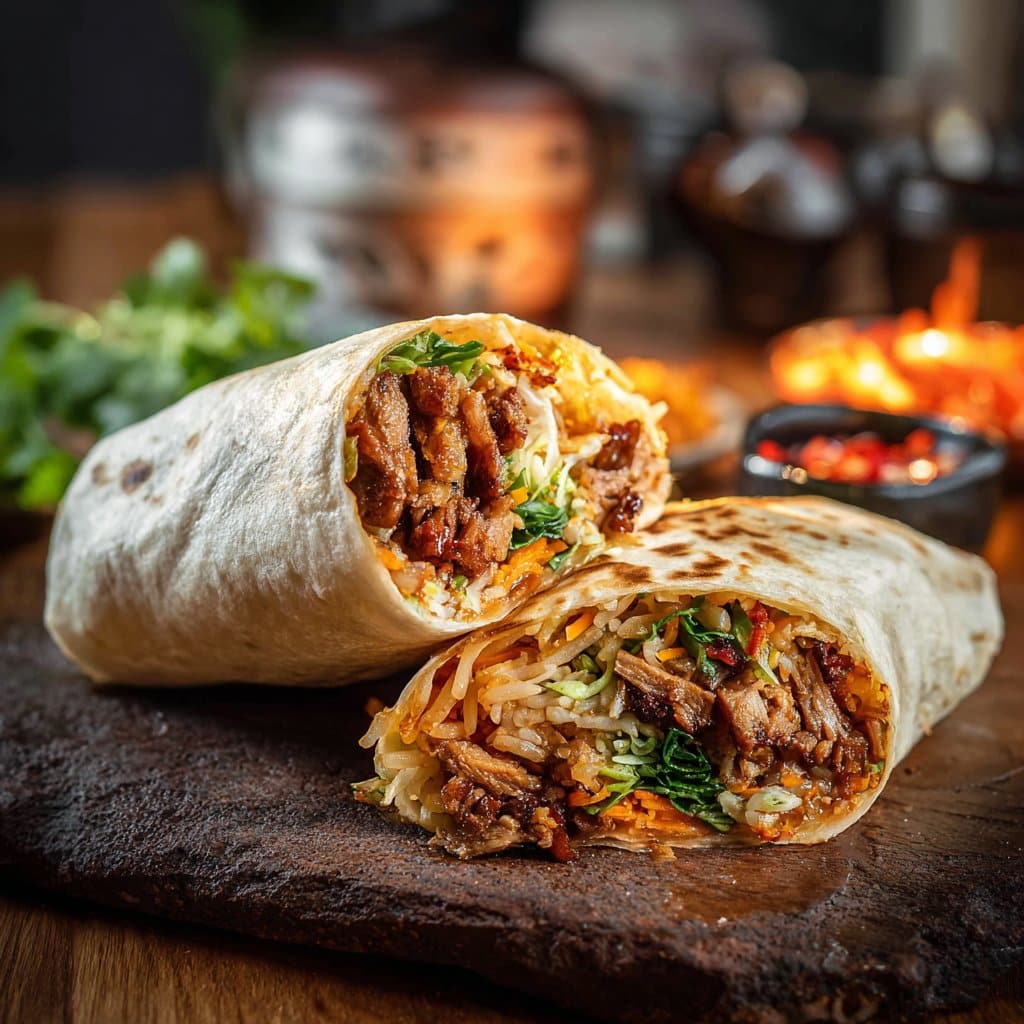
Slice the burrito on the bias and present two halves slightly askew on a long plate to reveal cross-sections of rice, meat, and slaw. Garnish with microgreens or finely sliced shiso for herbal lift. Serve with a small ramekin of extra gochujang mayo and a wedge of lime for bright acidity.
How to Store Korean Burrito:
Wrap individual burritos tightly in parchment and then foil; refrigerate up to 24 hours to preserve texture. To prevent sogginess, store sauce separately and assemble just before serving if planning ahead. Reheat wrapped burritos in a 350°F oven for 10–12 minutes, or sear briefly in a hot pan to restore crisp edges and warm the filling evenly.
Tips to Make Korean Burrito:
- Slice beef very thin and against the grain for tender bites.
- Keep sauce restrained — a little gochujang goes a long way; aim for balance between heat and cream.
- Toast sesame seeds and oil briefly to deepen aroma before finishing.
- Warm tortillas over an open flame or dry skillet for pliability and slight char.
Variation (if any):
Swap beef for lacquered short ribs or grilled salmon for a lighter option. For a vegetarian turn, caramelize sliced king oyster mushrooms with soy and mirin for a meaty texture. Serve on a butter-toasted tortilla or in a lettuce wrap for a low-carb presentation. Consider finishing with pickled daikon for sharper crunch.
FAQs:
Can I make this burrito vegetarian?
Yes. Replace beef with thick-sliced, well-seared king oyster mushrooms or marinated tempeh and keep the same sauce and slaw for equivalent umami and texture.
How spicy is the gochujang mayo, and can I tone it down?
Heat depends on your gochujang. Start with one tablespoon and taste; dilute with extra mayonnaise or a splash of rice vinegar to soften spice without losing flavor.
Can I prepare components ahead of time?
Absolutely. Slice and marinate the beef, make pickles and sauce a day ahead. Store separately and assemble just before serving to keep textures pristine.
Conclusion
This Korean Burrito balances glossy, savory beef with crisp slaw and a restrained, creamy gochujang sauce — an elegant handheld that reads as both refined and approachable. For a complementary riff and additional assembly ideas, see this Korean BBQ Burrito Recipe – Pinch of Yum. Share your plating variations or questions in the comments, and tag your photos when you recreate it. How would you make this dish your own?
Print
Korean Burrito
- Total Time: 30 minutes
- Yield: 4 servings 1x
- Diet: Carnivore
Description
An elegant Korean Burrito combines bold Korean flavors with crisp vegetables and a silky gochujang-mayo for a refined handheld experience.
Ingredients
- 4 large flour tortillas, warmed
- 2 cups cooked short-grain rice, hot (optional)
- 1 lb thinly sliced beef ribeye or sirloin
- 2 tbsp soy sauce, low-sodium
- 1 tbsp mirin or dry sherry
- 1 tbsp brown sugar, packed
- 1 tsp toasted sesame oil
- 3 tbsp mayonnaise, room temperature
- 1–2 tbsp gochujang (adjust to taste)
- 1 tsp rice vinegar
- 1 tsp honey
- 2 cups shredded Napa cabbage or romaine, crisp
- 1 small carrot, julienned
- 2 green onions, thinly sliced
- 1 tbsp sesame seeds, toasted
- 1/4 cup rice vinegar (for quick pickles)
- 1 tbsp sugar (for quick pickles)
- Pinch salt (for quick pickles)
Instructions
- Marinate the beef: combine soy, mirin, brown sugar, and sesame oil. Toss beef until glossy and let rest for 15–20 minutes.
- Make quick pickles: whisk rice vinegar, sugar, and salt; submerge cucumber or onion slices for 10 minutes.
- Prepare sauce: whisk mayonnaise, gochujang, rice vinegar, and honey until silky.
- Sear the beef: heat a heavy skillet over high heat and cook beef until edges caramelize (about 1–2 minutes per side).
- Toss slaw: combine cabbage, carrot, and green onions with sesame oil and a pinch of salt.
- Assemble: warm tortillas, spread gochujang mayo, add rice (if using), layer beef, top with slaw and pickles, and finish with sesame seeds. Roll tightly.
Notes
Keep mayonnaise at room temperature for a smooth sauce; slice beef against the grain for tenderness. Store sauce separately to prevent sogginess.
- Prep Time: 20 minutes
- Cook Time: 10 minutes
- Category: Main Course
- Method: Searing
- Cuisine: Korean
Nutrition
- Serving Size: 1 burrito
- Calories: 450
- Sugar: 8g
- Sodium: 750mg
- Fat: 18g
- Saturated Fat: 4g
- Unsaturated Fat: 14g
- Trans Fat: 0g
- Carbohydrates: 54g
- Fiber: 3g
- Protein: 24g
- Cholesterol: 75mg